
Back in 2023, we wrote an article exploring one of the most common questions we received: “Should I refer this client to Physiotherapy or Exercise Physiology?”. A few years on, it’s a question we’re still being asked regularly.
The answer remains much the same: often, it’s both.
Physiotherapists and Exercise Physiologists are university-qualified allied health professionals who share a common goal: helping people maintain their independence, mobility and quality of life. While there is some overlap between the two professions, each brings a different area of expertise and can play an important role in supporting older people to remain active and engaged in everyday life.
What has changed significantly, however, is the landscape in which we provide care. With the introduction of the Support at Home program, a greater emphasis on restorative care and reablement, and a growing focus on helping older Australians maintain their independence for longer, understanding the role of each profession has never been more important.
Physiotherapists
Physiotherapists are experts in assessing, diagnosing and treating physical conditions that affect movement, mobility and function.
They are particularly valuable when a client is experiencing:
- Pain
- A recent injury
- A fall-related injury
- Changes in mobility
- Complex movement difficulties
- The need for mobility aids or equipment
- Post-surgical rehabilitation
- Falls, trips or loss of balance requiring assessment and intervention
Physiotherapists may use assessment, education, manual therapy, rehabilitation and equipment prescription to improve function, safety and participation in everyday activities.
Exercise Physiologists
Exercise Physiologists are experts in using exercise as medicine. They design and deliver evidence-based exercise programs that help people improve strength, balance, endurance, mobility and confidence.
They are particularly valuable when a client requires:
- Falls prevention
- Strength and balance training
- Reconditioning following illness or hospitalisation
- Chronic disease management
- Improved physical activity levels
- Increased confidence with movement
- Long-term support to maintain independence
Exercise Physiologists are highly skilled in helping older people build the physical capacity needed to continue doing the activities that matter most to them.
Get Going with Physios & EPs
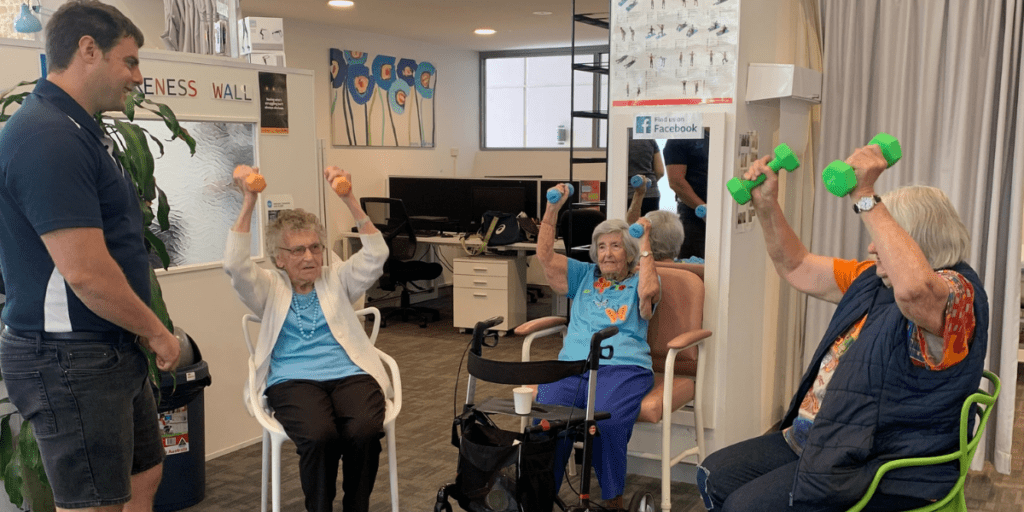
Our Get Going Falls Prevention Program draws on the expertise of both Physiotherapy and Exercise Physiology to help older people build strength, improve balance and maintain their independence.
Whether someone has experienced a fall, had a near fall, feels unsteady when walking, or simply wants to take a proactive approach to ageing well, Get Going provides practical strategies and tailored exercise to help them stay active and independent.
Delivered over 6-10 weeks, Get Going focuses on helping participants:
- Improve balance and mobility
- Build strength and stability
- Increase confidence moving around safely
- Reduce falls risk
- Support independence and wellbeing
The program can be delivered individually, in group settings, or in partnership with aged care providers and community organisations wishing to offer it within their own services.
How does this relate to Support at Home?
The Support at Home program places a strong focus on restorative care, reablement and helping older Australians maintain their independence for as long as possible.
Both Physiotherapists and Exercise Physiologists play an important role in achieving these outcomes.
At Recovery Station, our Physios and EPs work closely together to ensure every client receives the right support at the right time. Whether the goal is recovering from an injury, reducing falls risk, improving mobility or building strength and confidence, our team can help identify the most appropriate service.
If you’re unsure which service is right for your client, we’re always happy to discuss the referral and guide you towards the best option.
To learn more about the Get Going Falls Prevention Program or to discuss a referral, contact Recovery Station on 1300 588 851 or click here to make a referral.
Until next time,
